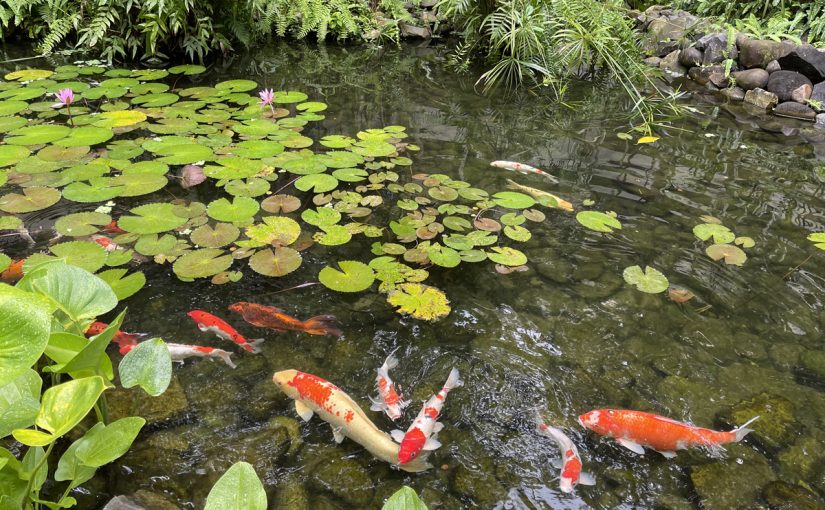
Koi fish are tough, and they can survive and thrive in all sorts of temperatures. It is possible for you to make their lives easier, though, especially in the cold winter months.
How To Help Koi Fish Survive The Winter
Unlike northern climates where ponds freeze over, winter in the Valley means daytime highs in the 60s and 70s with chilly nights that can dip into the 30s.
While you won’t need to worry about thick ice, your koi will still experience changes in metabolism, appetite, and activity level as the water cools. Lower temperatures slow their digestive systems, so feeding and filtration must be adjusted accordingly.
Whenever your Koi fish reside in an area capable of hitting some freezing temperatures, it’s crucial to address the following issues to keep them safe.
Ensure Oxygen Access
The fish will still need oxygen in order to survive even in frozen ponds. Solid ice surfaces can deplete life-sustaining oxygen, which can ultimately lead to a significant loss of life in the winter.
By installing a running water feature, aerator, or pond deicer, you’ll provide access to the air at the water’s surface. This can keep your fish alive.
Pond deicers work by thawing a small portion of the surface, allowing air to penetrate into the water. However, these must be checked often to ensure they are functioning properly.
Aerators operate by preventing the ice from completely covering the area directly above them. Running water features, meanwhile, work better than aerators, in most cases.
Insulation
Surface freezing is usually fine for most ponds. How many inches down the pond freezes will definitely depend on the weather in your area. That’s why it is important to make sure your fish have enough room under the ice. Fish that are packed together too tightly could potentially run out of oxygen.
The majority of these ponds that are built into the ground will be well-insulated by the surrounding soil. Above-ground ponds are more at risk of deep freezing. It’s suggested to wrap insulation, blankets, or dirt around any exposed walls.
Feeding Patterns
As pond water temperatures drop below 60°F, your koi’s metabolism slows. They won’t be able to digest high-protein foods the way they do in summer. Switch to a wheat germ–based or easily digestible cool-water formula and reduce feeding frequency.
Once water dips below 50°F, it’s best to stop feeding altogether until spring. Overfeeding in cool water leads to waste buildup and stressed fish, so less is definitely more this time of year.
Supercooling Features
When air is exposed to very cold temperatures, it can supercool a pond by rapidly dropping the temperature of the water. This commonly happens as the sun is going down.
A rapid decrease in temperature can harm or even kill Koi fish. If you have a tall water feature, try to bypass it during the extreme cold.
How To Protect Your Koi Pond From The Cold
While Phoenix rarely sees hard freezes, the occasional frosty night can happen. To protect your koi during a cold snap:
-
Keep a floating pond thermometer handy to monitor water temperatures.
-
Use a floating de-icer or pond heater only if temperatures are expected to dip below freezing for extended periods.
-
Covering your pond with a shade sail or temporary cover on the coldest nights can also help buffer against sudden drops.
If you have aquatic plants like lilies or marginal grasses, trim back dead growth to keep it from decaying in the water. Many desert-friendly pond plants go dormant in winter, so don’t worry if they look a little lackluster—they’ll bounce back in spring. Around the pond, rake up any fallen leaves or debris to reduce extra organic matter entering the water.
Phoenix Area Pond Supply
If you are looking for live fish, live plants, pond filtration, pumps, or anything else you need to start or care for your water garden or garden pond The Backyard Pond has everything you need. We serve residents of the greater Phoenix area with the best selection of Koi, plants, and all the supplies you need. Stop by or give us a call at 623-878-6695 with your questions.