Why Is My Pond Green?

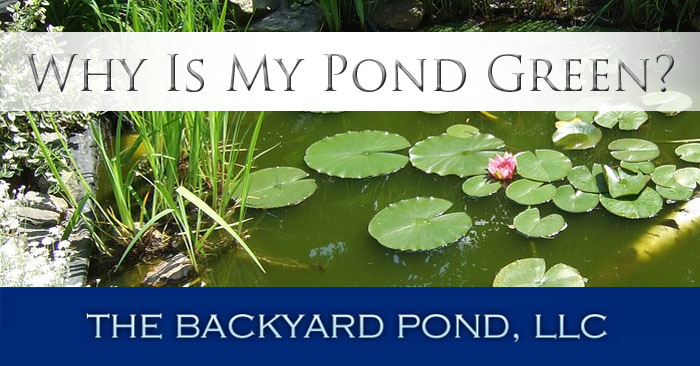
Why Is My Pond Green?

If you are searching “why is my pond green?” you are most likely looking for information about why it happened and how to fix it. This post covers

The only reason that a pond would turn green is because of algae that is growing in it. Firstly, algae in a pond isn’t always a bad thing. A thin, healthy algae layer on the surface is a vital part of having a good pond. It can prevent high levels of nitrates by consuming nitrates as food and putting off oxygen.

When Algae Is A Problem

  • Whenever the healthy algae blooms, it will turn the water cloudy to green to where the water is so green that you can’t see into the water.
  • Whenever you have the bad type of algae, called filamentous algae, it doesn’t always affect the color of the water, but it can grow in stringy masses or clumps to where it can overtake the pond.

In the situation where healthy algae has bloomed and turned your clear water green, here is what happened. The healthy algae that collects on the sides of the pond and never grows more than a fourth of an inch has decided to reproduce. Similar to a flower giving pollen, this algae will release millions of single cell algae. These cells are too small for a filter to pick up.

Controlling Algae Reproduction

So, how can you control the reproduction of algae? The best and efficient way is to install an UV light on the filtration system. The way that a UV light works is easy. As the water goes through the UV light it will be exposed to the light inside of the unit. The light waves are harsh enough that is destroys algae DNA, and kills it. Once the algae have died and starts to decompose it will begin to stick to each other. After the algae collects together, the mass becomes large enough for the filter to collect them or they go to the pond bottom. Once you have installed a UV light, the process takes about a week before the water is clear.

Stringy Algae

In the other situation, the pond water is clear but there are stringy algae all over and is rapidly growing throughout the pond. Algae becomes a problem when it breaks loose and floats around. Additionally, these algae will fill the basket and it will need to be cleaned constantly or it will stop the filter. This is due to filamentous algae. These algae introduced to a pond whenever you add plants. If a single spore is on a plant, it will create a problem.

The stringy algae can come in many forms. Some will grow slowly but some are fast growing and invasive. Some may not be obvious at first, but it will grow about 3 inches long on the pond walls. This type of algae will line your basket quickly to where it will affect the water flow but the basket has little debris in it. It is impossible for good algae to plug a basket as it is so small.

How can you control filamentous algae?

UV lights will have little effect on it because the algae grows on pond walls and never reaches the light. In mild cases, you can get the algae off the walls by hand when it gets ugly looking. In severe cases, it is best to use an algae control liquid. Algae Control is a great product that works well. It is a herbicide or weed killer. When dosed right, it is effective but you have to know how many gallons your pond is to use it properly. If you overdose the pond by 20% can kill your fish. It is suggested that you under dose the first couple of times that you use it, if you are unsure of how many gallons your pond is. 1-2 doses will normally kill the algae. It is recommended to use the half the dose every 2 weeks, instead of once a week as a maintenance. Keep your filter running to provide oxygen to your pond while treating because as the algae begins to decompose, it will take a lot of the oxygen out of the water. You have to pay attention when you use this product, but it is the most effective and easiest way to remove filamentous algae.

Tips about UV Lights

  • Ensure that you have plenty of circulation in your pond. Is it circulating together? If you have dead areas in the pond where the water doesn’t move, then those areas will grow algae and as the water moves in the pond, it will cloud the water.
  • Ensure that the UV light is sized for your pond. A light that is too small will not clear your water.
  • Ensure that your filter system is going 24/7. If you are only using it part of the time, you could see that keeping the water clear is hard.
  • The right sizes UV light with a good filter will clear your water all year without any real effort besides changing the lamp yearly. They work so well that it is recommended to never have a pond unless you have a UV light.
  • Ensure that you don’t exceed the recommended water flow through the unit. If you send fast moving pond water through it, it shortens exposure time, which reduces the ability to kill algae. You may need to install a bypass for the lamp. This allows you to control how much water goes through the unit. Proper water flow is
  • Ensure that you are changing the UV lamp yearly. After a year, many lamps are only work about 60% of capacity. The lamp could be on, but it may not have the ability to kill algae.

Pond Maintenance & Supply in Phoenix

If you have a green pond and need to get it under control we can do it for you, or help you choose the right products and tools to get the job done. We are a full service pond and koi pond company serving the entire Phoenix valley.  We will help you maintain your pond, get rid of unhealthy levels of algae, and promote the overall health and beauty of your pond.

Call Today – 623-878-6695
How To Maintain A Backyard Pond In Phoenix

How To Maintain A Backyard Pond In Phoenix

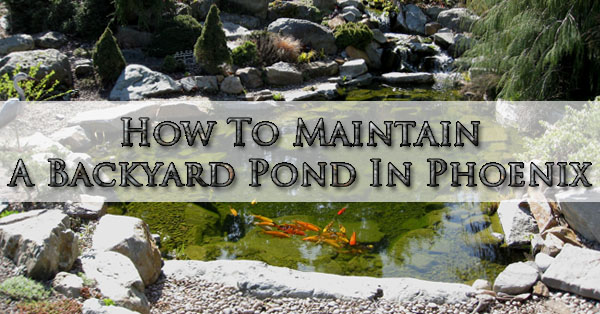
Having a pond in your backyard is a great centerpiece of your landscaping. However without proper maintenance it can become the monster lurking in your yard. Here are a set of steps for how to maintain a backyard pond.

Elements of a Backyard Pond

The type of maintenance required for each pond is different, partly because different yards will have more or less trees, sunlight, and other variables. Even different styles and materials the ponds are made with will mean more or less cleaning. Most ponds share common elements, here are a few of them.

Pond Edge Materials – The edges of most ponds are lined with an edging material. Usually concrete pavers or even stones are lined between the water and the rest of your landscape. This isn’t just for a great aesthetic look, but helps prevent contamination. The water running off your lawn may be fertilized. The chemicals found in lawn fertilizer are not good for these ponds, especially if you have Koi fish.

Pond Liners – The soil in your yard is meant to drain water away from the roots of your plants. When you have a pond you generally want to keep the water where you put it, and a PVC or rubber liner is how we get the job done.

Pond Sand Bases – Before the liner goes down a layer of sand is laid. This is so that your liner has a soft even place to rest. Without this you might have sharp rocks that will pierce your liner and leak your water.

Seasonal Backyard Pond Maintenance Routines

Depending on the size of your pond you will require more or less often maintenance. It might seem crazy but the larger ponds are actually easier to take care of. This is because they can cope with changes to chemistry and ecology. Here we have listed out the ways to take care of your backyard pond in each season.

Spring Backyard Pond Maintenance

  • If your liner has more than an inch of debris or muck you are going to need to drain the pond and hose off the liner. Cleaning the bottom of the pond keeps your filters and pumps working, and makes them last longer.
  • While you have the pond drained it is a good chance to look for any potential leaks. Limbs or branches from trees can fall and pierce the liner of your pond. Pond liner repair kits are inexpensive and effective. This will prevent water from leaking out, or contaminants under your liner from entering your ecosystem.
  • Replace the filter and make sure the pump is working. Replace any piece of your pump or filtration system that isn’t working.
  • Top off the water level in your pond. Do so by placing the water trickling into the bottom of the pond. This helps stir up the minimum amount of debris.
  • Get rid of any debris or leaves from the pond. This debris as it decomposes releases harmful chemicals into ponds. The Nitrate levels need to be controlled for these close ecosystems.
  • Consider adding some plants to help increase the level of oxygen in the water. In addition to aeration of the water from falling water you can put oxygenating aquatic plants into your pond.
  • If you have potted plants you can divide them. This keeps them growing well and getting bigger.
  • Switch the feed you are using for your fish in the spring. You will want to make sure that you are using a high-carbohydrate type food. This will help them increase activity.
  • After all potential for frost has passed you can add any submerged or potted plants to your pond. If you install them too early you run the risk of algae getting out of control.

Summer Backyard Pond Maintenance

  • Stay on top of the water level. Letting the water get too long concentrates salt in the water and is harmful to the fish, pond, pump and filtration system. Try to add a little every week or two instead of having to add large amounts every month.
  • Plants grow best in the summer and can get out of control. It’s important to remove dead leaves to keep the water clean. Plants or flowers that are overgrowing should also be trimmed back. This will help keep the water cleaner and require less maintenance.
  • Keep an eye on your pump intakes and filters. A weekly check should be done and clean them out if they are starting to get clogged.
  • Watch The Water Chemistry. Kits should be bought to keep track of the water quality. Much like operating a hot tub the chemistry in the water dictates how safe it is. Pond chemistry sticks should be used that properly measure for chlorine, ammonia, and chloramines. High levels of any of these chemicals can be harmful to, or kill your fish.
  • Watch the fish for odd behavior or sores. It can be a sign of water chemistry being off.
  • Use aquatic-plant fertilizer tables on your potted plants each month of the summer. This helps keep them healthy and growing well.
  • If your yard is prone to pests on the plants use non toxic methods to control them. Algae can grow out of control if you don’t control it. Use a long-handled bristle brush, pole, or rake to get rid of your algae.

Fall Backyard Pond Maintenance

  • Fall is known for falling leaves, and decaying leaves in your pond raise ammonia levels. If you only have a few trees and can skim the leaves out of your pond with a net or skimmer you should be fine. If you have a lot of trees near the pond a net should be set in place. They can be bought inexpensively and secured in place with tent spikes, bricks or rocks.
  • Cut back on the feeding of your fish. Once the water reaches 50°F stop feeding your fish entirely. During the winter digestion in fish enters an almost hibernation like state. The amount they need to eat is more than supplied by bugs and other things they can find naturally in the pond.
  • Take any plants that won’t cope well with colder temperatures. Arizona rarely has serious freezes. But plants that won’t survive cooler nights should be brought in.

Winter Backyard Pond Maintenance

  • In Arizona freezes are not common. However if there is a freeze coming, clear your water lines and any pond fountains.

Welcome To The Backyard Pond Blog

pond

The Backyard Pond, LLC serve Phoenix and surrounding areas throughout AZ. We are a full service Japanese Nishikigoi Dealer that offers a wide variety of services and products. Since 1996 our family owned and operated pond company has maintained our reputation of excellence by not compromising on the quality that we provide.

Specialists in imported Japanese Nishikigoi, Goldfish, Water-plants, Pond Supplies, Pond Construction and Design. All prices are subject to change without notice. Let us create the backyard pond of your dreams. Loaded with plenty of koi fish for sale, water gardens, aquatic plants and other pond accessories.

A backyard pond with clear running water, floating plants and colorful koi fish can turn a bland space breathtaking. Keeping it attractive and trouble free takes work, but with a little extra care, planning and building stages you can create a pond that’s almost maintenance-free.

The Backyard Pond, LLC